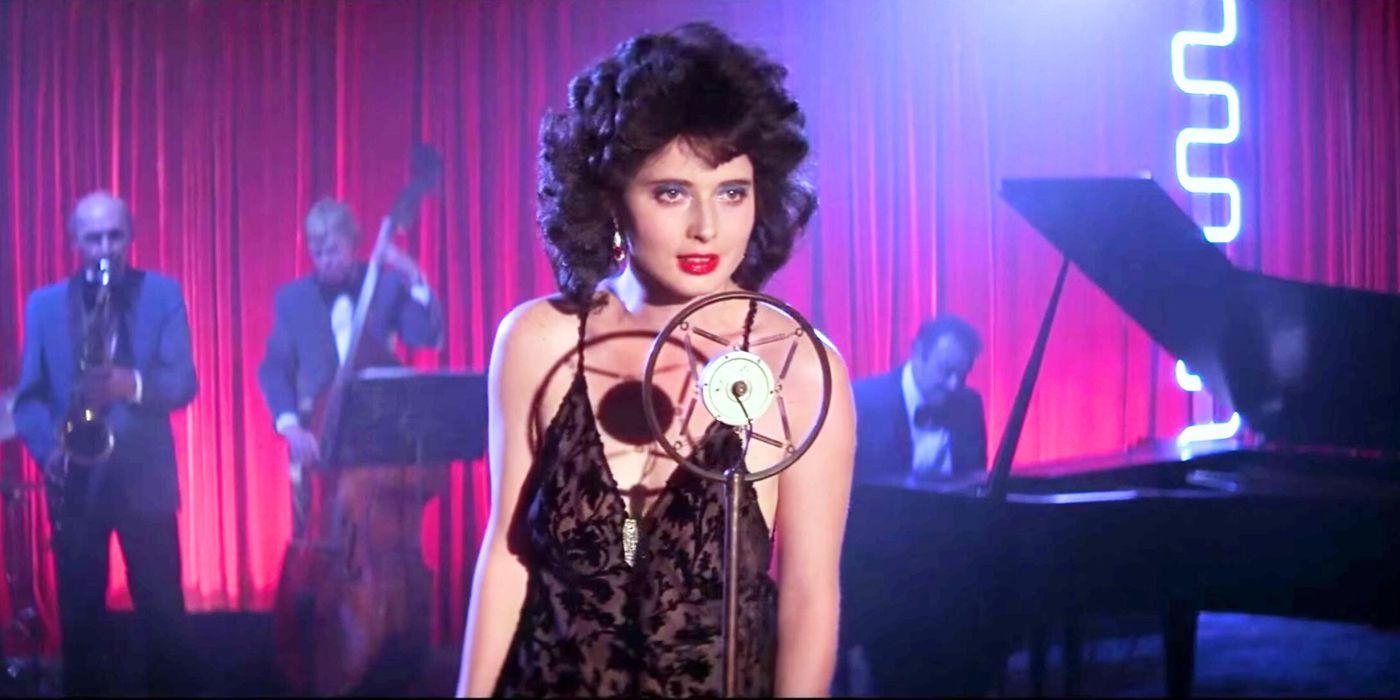
 Isabella Rossellini as Dorothy singing on stage in Blue Velvet.Image via De Laurentiis Entertainment Group
 By
William Smith
Published Jan 24, 2026, 9:10 PM EST
William Smith is a flesh and blood writer who hasn't seen natural sunlight in months. He spends every waking hour at his laptop producing content to satisfy the cruel algorithm and to give those who spend their time in the comments section something to criticize.
Sign in to your Collider account
Add Us On
follow
Follow
followed
Followed
Like
Like
Thread
Log in
Here is a fact-based summary of the story contents:
Try something different:
Show me the facts
Explain it like I’m 5
Give me a lighthearted recap
By
William Smith
Published Jan 24, 2026, 9:10 PM EST
William Smith is a flesh and blood writer who hasn't seen natural sunlight in months. He spends every waking hour at his laptop producing content to satisfy the cruel algorithm and to give those who spend their time in the comments section something to criticize.
Sign in to your Collider account
Add Us On
follow
Follow
followed
Followed
Like
Like
Thread
Log in
Here is a fact-based summary of the story contents:
Try something different:
Show me the facts
Explain it like I’m 5
Give me a lighthearted recap
The word "masterpiece" is getting thrown around a lot these days, especially with the Oscar nominations so recent. Whether any of the films that garnered Oscar nods this year are actual masterpieces is a question that only time can tell. A film that seems like a masterpiece initially can quickly fade from memory or become dated in retrospect. Conversely, movies that may not strike a chord with audiences or critics immediately can also grow in esteem over the years. Time is what gives us our masterpieces, and enough has passed since we closed out the last century that we can safely assign that designation to many of the films from those 100 years.
The 20th century had enough masterpieces to fill out a hundred lists of a hundred films each, and those lists are spread across the internet. Some single years of the past century could easily fill out a mere list of ten or twenty masterpieces, so selecting the “greatest” isn’t an objective process. There are films that are undeniable, but there are also those that are equally great and are less often ranked among them that can still be called masterpieces without cries of contrarianism. So, subjectively speaking, these 20 movies are the greatest masterpieces of the 20th Century.
20 'This is Spinal Tap' (1984)
 Image via MGM Studios.Image via Studio Canal
With the recent tragic loss of Rob Reiner and his wife, Michele Reiner, many have been revisiting the beloved filmmaker's classics. Many of them are among the greatest comfort watches ever made. The director had an unassailable run of success through the '80s and into the '90s that most filmmakers couldn’t even dream of having. The Sure Thing, Stand By Me, The Princess Bride, When Harry Met Sally…, Misery, A Few Good Men. One banger after another, and it all started with a little comedic masterpiece called This is Spinal Tap.
This rock mockumentary wasn’t the first to use the pseudo-documentary style in the name of comedy, but Reiner’s improvised classic codified the subgenre. Following the titular English rock group through the trials and tribulations of touring, the movie is simply a string of some of the most hilarious scenes ever committed to celluloid. Without this masterpiece, there might never have been movies like Best in Show, which was directed by Spinal Tap star Christopher Guest, or even shows like The Office. It’s a legendary comedy from a legendary director.
19 'The General' (1926)
 Buster Keaton on the front of a train looking ahead in The General.Image via United Artists
Far from the first comedic masterpiece to ever grace movie screens, This is Spinal Tap was simply continuing a grand tradition that began in the nascent silent era of cinema. A number of silent comedy classics from some of the greatest silent comedy stars could be considered masterpieces, from Charlie Chaplin’s City Lights to Harold Lloyd’s iconic Safety Last! However, if there’s a personal favorite here, it’s Buster Keaton, who was never better than in The General.
A Civil War comedy featuring a Confederate hero may sound like what Pete Hegseth puts on to fall asleep to, but despite that premise, The General is one of the most significant comedies ever made, and perhaps the very first action comedy. It follows Keaton as a train engineer rejected by the Confederate Army, who finds his chance for heroics after his would-be beau is taken by Union soldiers who have captured the titular locomotive. It’s physical comedy perfection, as Keaton performs all manner of death-defying stunts, all with a real locomotive. They're still stunning to this day and part of why The General is an absolute masterpiece.
18 'Snow White and the Seven Dwarfs' (1937)
 Snow White sings to a blue bird that is sitting on her finger in Snow White and the Seven Dwarfs.Image via Walt Disney Animation Studios
The 20th century has numerous animated masterpieces, from the early classics of Studio Ghibli to the singular works of directors like Brad Bird or Henry Selick. Of course, Disney looms large in this medium, and it’s doubtful any of the century’s greatest animators would deny the immeasurable impact and endurance of the studio's original masterpiece, Snow White and the Seven Dwarfs.
While a number of different story ideas were considered by Walt Disney for his studio's first feature-length film, he eventually settled on an adaptation of the classic Grimm fairytale. It was a massive undertaking for the studio, with Disney having to mortgage his home to finance it, and it was considered a considerable risk as the first American feature-length animated film. The risk paid off, as the film became a massive success, leading to a golden age of animation and the exponential growth of the studio.
17 'Star Wars' (1977)
Star Wars is the most consequential blockbuster ever made. George Lucas’ first journey to a galaxy far, far away solidified the summer movie success formula established by Jaws two years earlier, and its impact on pop culture, merchandising, and franchise filmmaking is still evident even in the modern streaming era. Star Wars has expanded so far beyond its humble beginnings that it’s hard to even imagine a time when the franchise came with low expectations.
It may be the gold standard now, but when Lucas first pitched his idea for a space opera inspired by the matinée serials of his youth, few studios had any real faith in the filmmaker. Even the cast and crew feared it would be a failure, but Lucas’ vision far surpassed all expectations to become the first true film phenomenon. That phenomenon continues to this day as the powers that be continue to milk it for all its worth, and multiple generations of fans continue to debate the franchise’s greatest entry. Every fan has their favorite Star Wars film, but none would be possible without the landmark success of the first.
16 'The Silence of the Lambs' (1991)
 Hannibal Lecter, played by Sir Anthony Hopkins, is restrained with a muzzle in The Silence of the Lambs.Image via Orion Pictures
One of only a few films to win Best Picture, Director, Actor and Actress at the Academy Awards, The Silence of the Lambs is also the only horror film to ever win the big prize. Though some might try to categorize the film in the nebulous thriller genre, there’s no mistaking that Jonathan Demme’s violent, visceral adaptation of Thomas Harris’ novel is a full-blooded horror movie. As an immaculately crafted procedural, it set a new standard for serial killer cinema that was never bettered in the 20th century.
While Demme’s direction is a major part of the success, it hinges most directly on the performances of Jodie Foster and Anthony Hopkins. As FBI trainee Clarice Starling and cunning cannibal Hannibal Lecter, respectively, the two give career-defining performances that layer their interactions with fear, seduction, manipulation and affection. The Silence of the Lambs is never afraid of its more extreme content, and its transgressive nature is what has also made it controversial, particularly in its portrayal of LGBTQIA characters. However, through its visual storytelling and sharp performances, it becomes a masterpiece.
15 'The Passion of Joan of Arc' (1928)
 Marie Falconetti as Joan of Arc in The Passion of Joan of ArcImage via Gaumont
Carl Theodor Dreyer's The Passion of Joan of Arc is a deeply felt masterpiece that hasn't lost any of its effectiveness, even with it approaching its 100th anniversary. It was radical for its time, with visuals that still stand out for breaking as many conventions as possible while also capturing the kind of minute emotions in performances that were far from the norm in the theatricality of the silent era. The lead performance of Renée Jeanne Falconetti as Joan, which was her only major role, is still among the greatest ever given.
The extensive use of close-ups in the cinematography, along with the minimalist set design and stark lighting, combine to make one of the most vivid films of the silent era, with a brutal sense of humanity and emotion that is genuinely lacking in many of its contemporaries. Many dramas from the same time period look comically exaggerated in comparison to Dreyer's masterpiece, which is why its images and performances have outlasted so many others.
14 'Blue Velvet' (1986)
 Dennis Hopper and Isabella Rossellini perform an intense scene in Blue Velvet (1986).Image via De Laurentiis Entertainment Group
No one made films like David Lynch. Not before or since he unleashed his idiosyncratic work upon the viewing public has there been a director like him. There have been those who have deliberately or indirectly tried to emulate him in efforts that are often dubbed Lynchian, but he was one of a kind. While he had a few efforts that might be considered more conventional, such as The Straight Story or The Elephant Man, it’s his more surreal works that showed his unique genius. If there was any film that could be the Rosetta Stone to understand Lynch as a filmmaker for the uninitiated, it was Blue Velvet.
This thriller is a dark suburban yuppie nightmare featuring Lynch regular Kyle MacLachlan as a milquetoast collegiate who finds a severed ear that draws him into a web of sex, violence, and mayhem. It’s all so unsettling yet eerily intriguing, with richly layered performances by Isabella Rossellini as a troubled nightclub singer and Dennis Hopper as the terrifying criminal who has her under his thumb. Blue Velvet is but one of Lynch’s masterpieces, but it's arguably his most defining of the 20th century, one that will rattle your psyche.
13 'Once Upon a Time in the West' (1968)
 Harmonica (Charles Bronson) points a gun at Frank (Henry Fonda), who is drawing his gun and looking shocked in Once Upon a Time in the WestImage via Paramount Pictures
Selecting a single Western masterpiece to represent the genre as a whole is a futile effort, but if you only have the time to watch one, watch the one that is all Westerns. Sergio Leone’s epic Once Upon a Time in the West not only provides his definitive statement on the genre that he helped redefine with his spaghetti Western Dollars trilogy, but also is filled to the brim with references that cover the spread of the genre up to that point in time.
Subscribe to the newsletter for deeper cinema insights
Join the newsletter to deepen your appreciation of 20th-century film masterpieces: curated context, fresh perspectives, and handpicked classics that make discovering and rewatching cinema more rewarding through thoughtful coverage. Subscribe By subscribing, you agree to receive newsletter and marketing emails, and accept Valnet’s Terms of Use and Privacy Policy. You can unsubscribe anytime.It’s a sprawling tale of greed and revenge in the open West where three dangerous men converge. Charles Bronson is the spiritual successor to Clint Eastwood’s Man with No Name, while Jason Robards is a bandit with a heart of gold, and Henry Fonda makes a terrifying turn against type as a ruthless killer. Layer all that with a fierce performance by Claudia Cardinale as the widow caught in the crossfire and put another indelible Ennio Morricone score on top, and you’ve got a rip-roaring masterpiece of the Wild West.
12 'Breathless' (1960)
 Jean-Paul Belmondo holding Jean Seberg's face on his hand in BreathlessImage via StudioCanal
Some films fill the mold with every ingredient in the box, while others break it with full force. Jean-Luc Godard’s Breathless is the latter, a bold rejection of the cinematic status quo. Though many of the startling techniques present in Godard’s French New Wave masterpiece, such as its documentary style and jump cuts, weren’t pioneered here, they are employed to perfection in a way that represented a fundamental evolution in emerging cinema style.
Like its main character, Breathless is cool, detached and hyper-aware of cinema, making it a foundational pillar of postmodernism. Without Godard, there is no Quentin Tarantino, even though the French filmmaker had an open disdain for the brash director. You can see the DNA in so many post-modern characters in Breathless' protagonist, as well as feel the tectonic shift in cinematic style that it, and several other films of the same movement, were responsible for.
11 'Psycho' (1960)
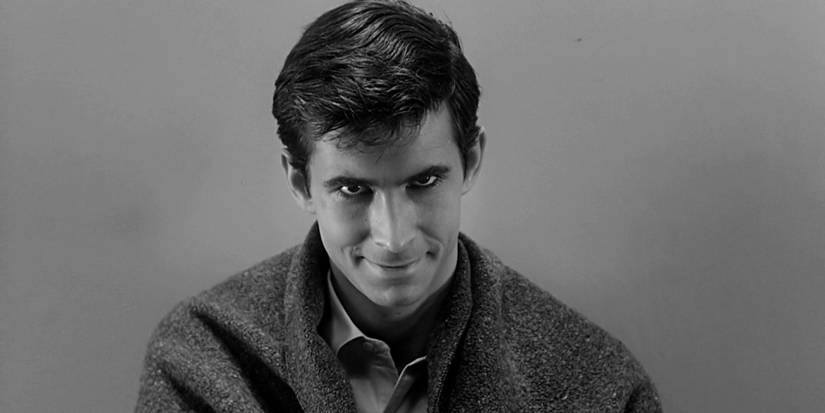 Anthony Perkins smirking evilly and looking at the camera in Psycho.Image via Paramount Pictures
While Godard was breaking ranks on his side of the pond, Alfred Hitchcock was flaunting convention over in the States with his shocking proto-slasher Psycho. It was a thoroughly modern masterpiece that forewent the gothic and supernatural villains that had dominated Hollywood horror for decades for one that looked like the boy next door. Anthony Perkins' Norman Bates was inspired by real-life serial killer Ed Gein, giving audiences a boogeyman who felt all too flesh-and-blood for them.
Adding to the film's effectiveness is its iconic mid-film twist that sees Janet Leigh's protagonist summarily killed off. It was a twist that Hitchcock maintained by also insisting that no movie-goers be allowed into the film after it had started. With streaming services now clogged with true-crime documentaries and the likes of Gein inspiring an insipid miniseries, it's hard to imagine how truly transgressive and terrifying Hitchcock's film was for audiences in 1960, but Psycho's dark legacy lives on in the pantheon of cinematic psychos it inspired.
-
 Movie
Movie
-
 Blue Velvet
-
 Taxi Driver
What To Watch
 July 20, 2025
The 72 Best Movies on Netflix Right Now
Trending Now
July 20, 2025
The 72 Best Movies on Netflix Right Now
Trending Now
 Collider's 100 Greatest Movies of the 21st Century, Ranked
 The 20 Greatest Disney Animated Movies of All Time, Ranked
 The 11 Most Thrilling Family Adventure Movies, Ranked